
Organic Chicken
in the UK
Why the welfare gap between organic and conventional chicken is bigger than almost any other meat — and where to find British producers doing it properly.
Of all the meat we eat, chicken is where the welfare gap between organic and conventional is most stark — and most overlooked.
Chicken is Britain's most popular meat. It's also, in its conventional form, one of the most intensively produced. The bird that arrives in a supermarket — even a free range one — has almost certainly been bred to grow at a rate that its body can barely sustain, slaughtered at around 35 days old, and raised in conditions that bear little resemblance to what the word "chicken" suggests to most people.
Organic chicken is different — not just in how the birds are kept, but in the breed, the growth rate, the diet and the slaughter age. An organic chicken takes roughly twice as long to reach slaughter weight as a conventional one. That slower growth produces a bird with better muscle structure, more flavour and a fundamentally different eating experience.
This guide explains what organic certification actually means for chicken, why the welfare issues in conventional poultry are more serious than most people realise, and which British producers are worth buying from.
The fast growth problem —
what most people don't know
The vast majority of chicken sold in Britain — including much of what is labelled free range — comes from a breed called the Ross 308. It is a commercial broiler breed developed specifically for rapid weight gain. A Ross 308 chick reaches slaughter weight in around 35 days. A traditional breed takes 70 to 84 days to reach the same weight.
That doubling of growth rate has profound consequences for the bird's welfare. Ross 308 chickens grow so fast that their skeletal and cardiovascular systems struggle to keep pace with their muscle mass. Lameness is common — birds that can barely support their own weight. Heart and lung problems are endemic. Post-mortem studies of commercial broiler flocks consistently find high rates of painful skeletal abnormalities.
These birds are not suffering because of bad farmers. They are suffering because they have been bred to grow in a way that their bodies cannot comfortably sustain. The breed itself is the welfare problem — and it is used across virtually the entire conventional and much of the free range sector.
The indoor environment compounds this. Commercial broiler sheds typically house tens of thousands of birds at high density. Even where outdoor access is technically available — as in much standard free range production — the vast majority of birds never reach it. The shed is too large, the flock too dense, and the birds too lame to travel the distance to the pop holes.
This is not a fringe concern or an animal rights position. It is the documented conclusion of peer-reviewed veterinary research and the subject of ongoing parliamentary scrutiny. The RSPCA, the Soil Association and independent welfare scientists are in broad agreement on the scale of the problem.
A bird raised under chronic stress, unable to move freely, with compromised bone and cardiovascular health, produces different meat to one that has lived well. The texture is different. The flavour is different. A slow-grown organic chicken that has ranged on pasture tastes like a different food entirely — and in a meaningful sense, it is.
What organic certification
actually guarantees for chicken
Certified organic chicken is a fundamentally different product to conventional broiler chicken — not just in how the bird is kept, but in what it is. Organic standards in the UK require slower-growing breeds. The Soil Association prohibits the use of fast-growing commercial broiler breeds entirely. This single requirement changes everything downstream.
A Soil Association certified organic chicken must be slaughtered at a minimum of 81 days — more than twice the 35 days typical of a conventional Ross 308. That extra time produces a bird with properly developed musculature, better bone density and measurably more flavour. It also means the bird has had time to actually live — to range, to forage, to express natural behaviours.
Organic chickens must have continuous daytime access to outdoor range. The range must be organic pasture — meaning no synthetic pesticides or fertilisers on the land they graze. Maximum indoor stocking density for organic chicken is significantly lower than conventional free range. And the flock sizes that trigger the requirement for outdoor access are smaller, meaning birds are more likely to actually use it.
Feed must be organically produced and free from genetically modified ingredients. Routine antibiotic use is prohibited — a particularly significant point given that poultry farming is one of the sectors where antibiotic overuse has been most problematic. Growth-promoting substances are prohibited entirely.
The difference between Soil Association organic and standard free range is considerable. Standard free range requires outdoor access but sets no breed requirements, no minimum slaughter age and no restrictions on growth rate. A free range Ross 308 is still a Ross 308 — still growing at a rate its body struggles with, still lame, still spending most of its short life indoors. The label says free range. The reality is often very different.
Organic chicken costs more — typically two to three times the price of a standard supermarket bird. We think it's worth it, for the welfare reasons and for the taste. But we'd also say: buy a smaller, better chicken less often rather than a large, cheap one every week. A slow-grown organic chicken, properly cooked, goes considerably further than its size suggests.
Campylobacter — the food safety
issue nobody talks about
Campylobacter is the most common cause of food poisoning in the United Kingdom. Around 280,000 cases are reported each year — and the Food Standards Agency estimates the true figure is considerably higher, as most cases go unreported. The primary source is chicken. Around four in five cases of campylobacter poisoning in Britain are linked to contaminated poultry.
The symptoms are unpleasant — severe stomach cramps, diarrhoea, vomiting and fever lasting up to ten days. For most healthy adults it is miserable but not dangerous. For the elderly, the very young, pregnant women and the immunocompromised, it can be serious. Around 100 people die from campylobacter-related illness in Britain every year.
The scale of contamination in the conventional poultry supply chain is significant. FSA testing has found campylobacter present on the majority of fresh chicken sold in UK supermarkets at various points. The bacteria lives in the gut of the bird and spreads rapidly in high-density flocks — which is precisely the environment that intensive broiler production creates.
The connection to welfare and production method is direct. High stocking densities, stressed birds and rapid throughput at slaughter all increase the risk of campylobacter contamination. Studies consistently show that slower-grown birds in lower-density flocks have lower rates of campylobacter colonisation. Organic production — with its lower stocking densities, slower growth rates and outdoor access requirements — is associated with meaningfully lower contamination rates, though it does not eliminate the risk entirely.
This is not an argument that organic chicken is campylobacter-free. It isn't — and it would be misleading to suggest otherwise. It is an argument that the conditions that produce better welfare also tend to produce safer food. The two things are connected at the farm level in ways that supermarket labelling rarely makes clear.
Basic food hygiene remains essential regardless of the source — campylobacter is killed by thorough cooking, and cross-contamination from raw chicken is the most common route of infection in domestic kitchens. But if you want to reduce your exposure at source, the evidence points consistently toward higher welfare, lower density production.
Campylobacter is the food safety argument for organic chicken that almost nobody makes — and we think it deserves to be made. The welfare case and the food safety case point in the same direction. Slower growth, lower density, genuine outdoor access. These things produce a better bird, a safer bird and a more honest product. That feels worth knowing.
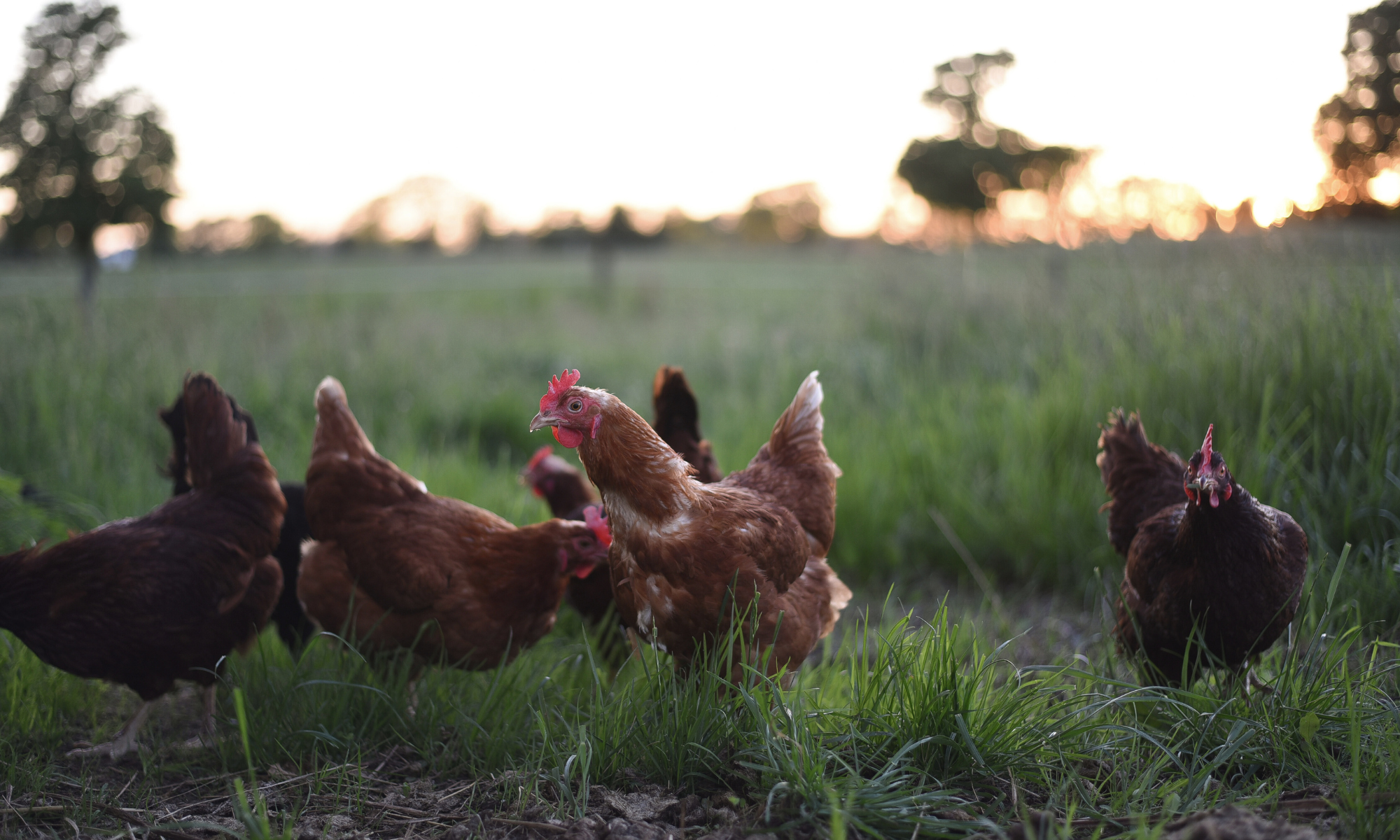
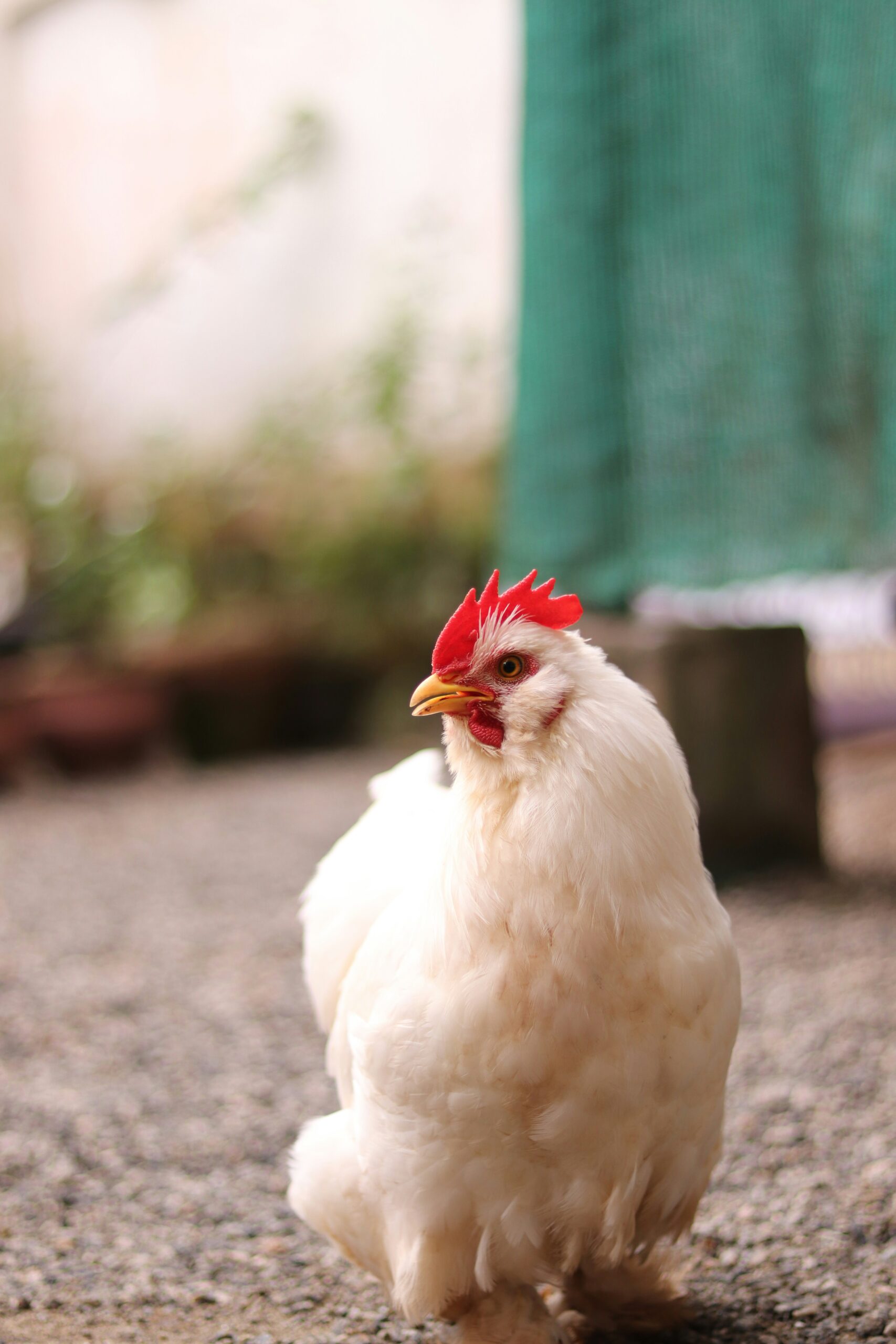
Organic chicken producers
worth knowing about
These are producers we have researched and believe to be genuinely worth seeking out. We do not take payment for listings — inclusion is based on certification, farming practice and transparency.
The environmental case —
why feed matters as much as farming
The environmental footprint of chicken is often presented as relatively benign compared to beef — and in terms of direct greenhouse gas emissions, that's broadly true. But the feed story is more complicated, and it's where organic chicken makes a genuinely meaningful difference.
Conventional broiler chickens are fed on diets that include a significant proportion of soya — much of it imported from South America, where soya production is a major driver of deforestation in the Amazon and Cerrado. The UK imports around 3 million tonnes of soya each year, the majority of it for animal feed. Chicken production accounts for a substantial share of that.
Organic standards require that feed is organically produced. This doesn't eliminate soya from the diet entirely, but it does require that any soya used is certified organic — which carries its own land use and sourcing requirements. Many organic producers go further, actively reducing or eliminating soya from their feed mix in favour of home-grown protein sources like peas and beans.
The land use argument cuts both ways. Organic chicken requires more land per bird than intensive production — slower growth and lower stocking densities mean more space per kilogram of meat. In a world of finite agricultural land, that matters. We're not going to pretend it doesn't.
What we'd say in response is that the land organic chickens occupy tends to be managed in a way that supports biodiversity, builds soil health and integrates with a broader farming system. An organic poultry farm is typically part of a mixed farming operation where the birds play a functional ecological role — improving pasture, managing insects, contributing to soil fertility. That integration has environmental value that simple land-per-kilogram comparisons don't capture.
The most environmentally honest position is probably this: eat less chicken overall, and when you do eat it, eat chicken that was raised properly. A slow-grown organic bird eaten once a week is a better environmental choice than a fast-grown conventional one eaten four times a week. The premium price of organic chicken, for most households, naturally encourages that moderation.
Questions we get asked
about organic chicken
The evidence is more nuanced than the marketing often suggests. Organic chicken from slower-growing breeds raised on organic pasture does show some measurable nutritional differences — slightly higher omega-3 fatty acid content, lower overall fat levels due to more active muscle development, and the absence of antibiotic and growth promoter residues. These differences are real but not dramatic.
The stronger argument is what organic chicken doesn't contain. No routine antibiotic residues. No synthetic growth promoters. Feed produced without synthetic pesticides. And critically — lower rates of campylobacter contamination at source, which is the most significant food safety distinction between organic and conventional poultry. For us, those absences are more compelling than any nutritional uplift.
Routine antibiotic use is prohibited in certified organic poultry farming. This is particularly significant for chicken because the conventional poultry sector has historically been one of the heaviest users of antibiotics in British agriculture — administering them preventatively to entire flocks to reduce the disease risk that comes with high-density indoor production.
Organic chickens can be treated with antibiotics if they are genuinely ill — refusing treatment to a sick bird would be a welfare failure. But when an organic bird is treated, it must be withdrawn from the organic supply chain. The result is that organic chicken is produced without the routine antibiotic use that drives antimicrobial resistance, and carries a significantly lower risk of antibiotic residues than conventionally reared poultry.
Of all the meat categories, chicken is where we think the ethical argument is most clear-cut. The welfare gap between organic and conventional is enormous — not just in how birds are kept, but in what they are. A Ross 308 commercial broiler bred to reach slaughter weight in 35 days, in a shed of tens of thousands of birds, is a profoundly different animal to a slow-grown organic chicken raised on pasture for 81 days or more.
Organic certification — particularly Soil Association certification — prohibits fast-growing commercial breeds entirely. That single requirement eliminates the skeletal abnormalities, lameness and cardiovascular problems that are endemic in commercial broiler flocks. It doesn't just change the conditions the bird is kept in. It changes what the bird is. For us, that's the most important distinction in the entire food system.
Honestly — it's complicated. Organic chicken requires more land per bird and more time to produce, which increases some environmental costs. In simple land-per-kilogram terms, organic is less efficient than intensive production.
The counterarguments are meaningful though. Organic feed requirements reduce dependence on imported deforestation-linked soya. Lower stocking densities mean less disease pressure and less antibiotic use. And organic poultry farms tend to be integrated into broader mixed farming systems where the birds play an active ecological role — improving pasture, managing insects, contributing to soil health. That integration has real environmental value that simple efficiency metrics don't capture. Our honest view: eat less chicken overall and eat it better. That combination is almost certainly the most environmentally sound position.
In our experience, considerably so — and the reason is more fundamental than with other meats. A slow-grown organic chicken from a heritage or traditional breed is a structurally different bird to a fast-grown Ross 308. It has had time to develop proper musculature. The texture is firmer and more varied. The flavour is deeper. The legs and thighs in particular — often the least interesting part of a supermarket chicken — are transformed.
The difference is most obvious when you roast a whole bird. A good organic chicken fills the kitchen with a smell that a supermarket bird simply doesn't produce. The carcass makes better stock. The meat holds together better when carved. It goes further. We'd estimate a well-sourced organic chicken of 1.5kg feeds four people comfortably — something a cheap supermarket bird of the same weight rarely achieves. Buy it from one of the producers listed on this page and cook it well. The difference is not subtle.
Find certified organic chicken
from British producers
Browse our directory of certified organic poultry producers and delivery services across the UK — all independently verified and genuinely worth knowing about.