Organic Vegetables
in the UK
Why soil health matters as much as pesticides, which vegetables to always buy organic, and where to find British growers worth trusting.
Vegetables are where organic farming makes its most compelling environmental argument and where the difference between good soil and poor soil is most visible in what ends up on your plate.
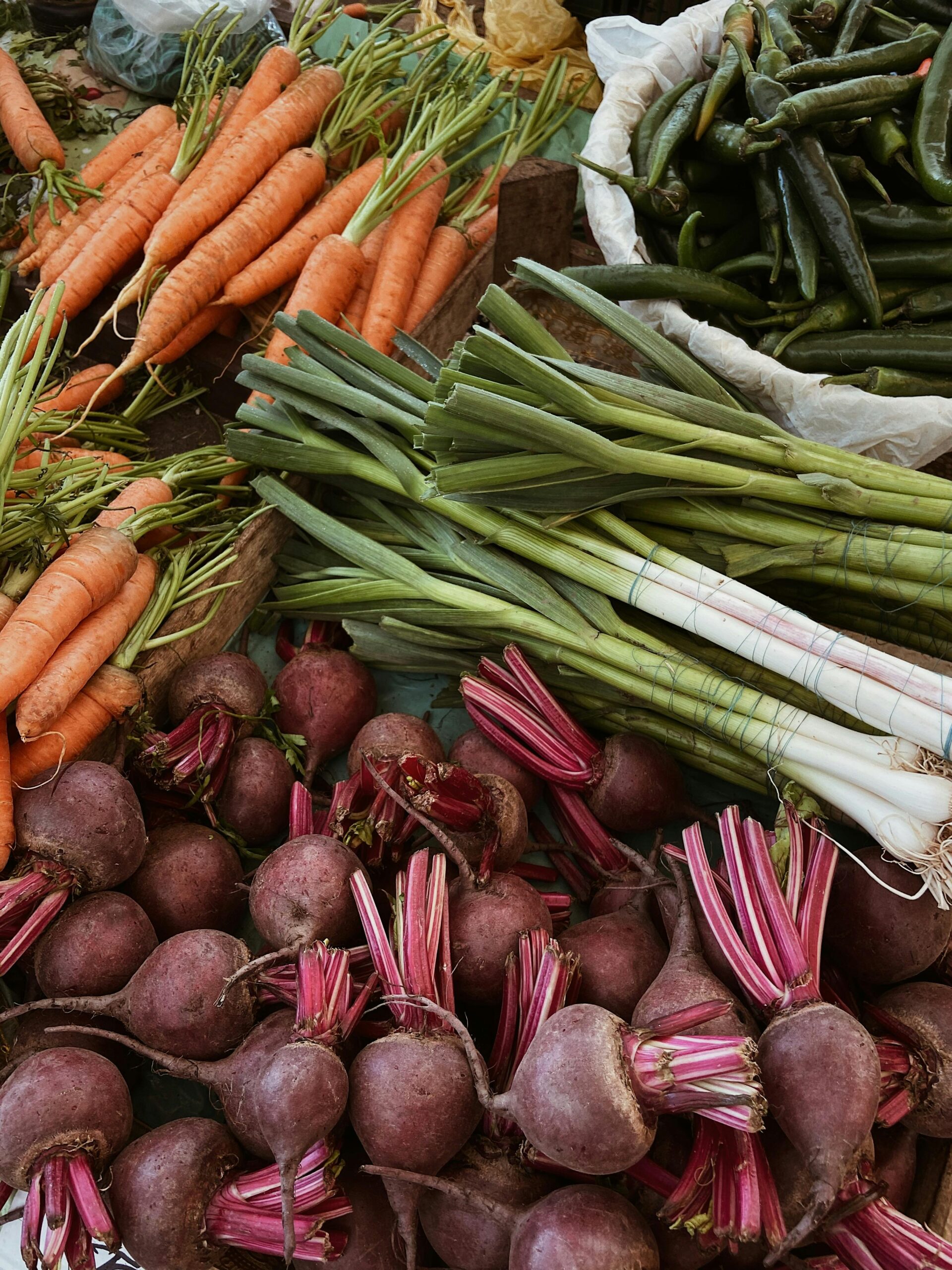
We buy organic vegetables as a default, particularly anything with an edible skin or eaten raw. Courgettes, peppers, salad leaves, spinach, spring onions, carrots — all eaten without peeling, all absorbing whatever the soil and the spray programme has deposited on or in them. The edible skin rule that guides our fruit buying applies here too.
But the vegetable case for organic goes beyond pesticides. Soil health is the argument that doesn't get enough attention. Organic vegetable farming builds soil biology — the complex ecosystem of bacteria, fungi, earthworms and microorganisms that makes soil genuinely alive. Conventional farming, with its dependence on synthetic fertilisers and pesticides, tends to deplete that biology over time. The difference between a vegetable grown in genuinely healthy, biologically active soil and one grown in depleted, chemically sustained ground is real — and increasingly supported by evidence.
This guide covers which vegetables to prioritise for organic, what organic certification means for vegetables specifically, why soil health matters, and where to find British growers worth supporting.
What organic certification
actually means for vegetables
Organic vegetable certification in the UK prohibits synthetic pesticides, herbicides and fungicides entirely. It also prohibits synthetic fertilisers — which is the distinction that matters most for soil health. Conventional vegetable farming feeds the plant directly with synthetic NPK fertilisers, bypassing the soil biology that would otherwise mediate nutrient uptake. Over time this depletes the microbial life, earthworm populations and fungal networks that make soil genuinely productive.
Organic farming feeds the soil rather than the plant. Compost, green manures, cover crops and crop rotation build biological activity in the soil — creating the conditions in which plants access nutrients through natural processes rather than artificial supplementation. The difference between soil that is biologically active and soil that is chemically sustained is visible — in the structure, the smell, the earthworm count and increasingly in the mineral content of what grows in it.
GMO seeds are prohibited in organic farming. This is less significant in the UK than in some other countries — GM crops are not widely grown in Britain — but it matters for imported organic produce, where GM inputs in the supply chain are a real concern.
Crop rotation is a requirement of organic certification. This means the same vegetable cannot be grown in the same field year after year — which is how conventional farming often operates, with pesticides and fungicides managing the pest and disease pressure that monoculture creates. Rotation breaks pest cycles naturally, reduces disease pressure and improves soil structure. It also means that organic vegetable farms tend to grow a wider range of crops — which benefits biodiversity, soil health and the variety available to consumers.
Buffer zones between organic fields and conventional neighbours are required, protecting certified organic crops from pesticide drift. This is particularly important in areas of intensive conventional horticulture — parts of Lincolnshire, Kent and the Fens — where the farming landscape is dominated by large-scale conventional operations.
We find the soil health case for organic vegetables more compelling than the pesticide case alone. A vegetable grown in genuinely healthy, biologically diverse soil — with access to the full spectrum of soil minerals mediated by mycorrhizal fungi and bacterial communities — is a different product to one grown in depleted ground supplemented with synthetic fertiliser. Whether that difference shows up measurably in nutritional content is debated. That it shows up in flavour is, in our experience, not.
Organic vegetable suppliers
worth knowing about
Most organic vegetables in the UK reach consumers through box schemes and retailers rather than direct farm sales. These are the sources we trust and use ourselves.
Which vegetables we prioritise —
and our honest reasoning
We want to be upfront about something before you read this guide. The UK government's position — supported by the Food Standards Agency — is that pesticide residues found on conventionally grown vegetables are within legal safety limits and pose no risk to health. That is the official scientific consensus. We are not going to contradict it.
What we would say is this: those limits are set for individual pesticides, assessed in isolation. They do not account for the combined effect of multiple residues consumed simultaneously — what researchers call the cocktail effect. That gap in the regulatory framework is acknowledged by scientists and has not been adequately addressed. Whether it matters at the levels found in food is genuinely unknown. That uncertainty is the reason we buy organic where we can.
This is a precautionary position, not a claim of proven harm. If budget is a constraint, eating more conventional vegetables is better than eating fewer organic ones — the health benefits of eating plenty of vegetables far outweigh any theoretical pesticide concern. But if you want to reduce your exposure to chemical inputs in food, this is our practical guide to where it matters most.
British seasonal vegetables —
our best shot at organic without the import problem
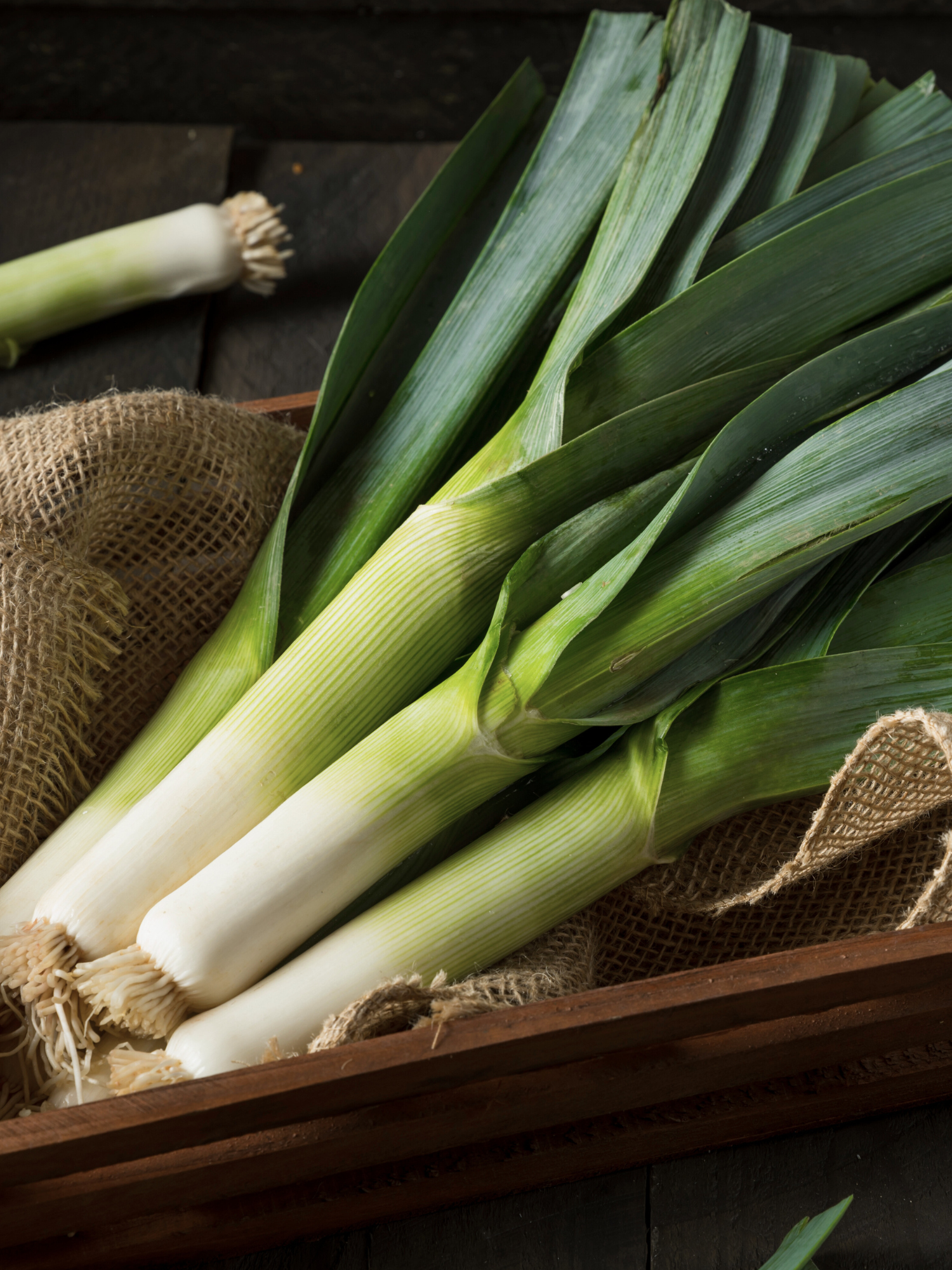
If there is one area where eating organic is most accessible, most affordable and most impactful, it is British seasonal vegetables. Unlike fruit — where we are heavily dependent on imports for much of the year — Britain grows an enormous range of vegetables year-round. Leeks, carrots, parsnips, cabbages, kale, Brussels sprouts, cauliflower, beetroot, swede, celeriac — all are grown in Britain through autumn and winter. Courgettes, beans, peas, tomatoes, cucumbers, sweetcorn — through summer and early autumn.
British-grown vegetables consistently test better for pesticide residues than imported equivalents. Around 31% of UK-grown samples show multiple pesticide residues, compared to 55% of imported samples — and imported produce is roughly two and a half times more likely to exceed safety limits. Eating British is not the same as eating organic. But it is meaningfully cleaner on average than eating imported conventional produce.
The import problem is compounded by the fact that some countries supplying UK supermarkets use pesticides that are banned in Britain. Those pesticides are legal to use in the country of origin and legal to import provided residues on arrival are within UK limits — but they are not permitted in British farming. Buying British removes this concern entirely.
A box scheme is the most practical way to eat British seasonal organic vegetables consistently. Riverford and Abel & Cole both prioritise British-grown produce when it's available — their boxes automatically shift with the seasons, meaning you're eating what's actually ready to harvest rather than what's been flown in from the other side of the world.
The seasonal calendar for British vegetables is considerably longer than most people assume. With the right storage crops — squash, root vegetables, brassicas — a committed box scheme customer can eat primarily British organic vegetables for nine to ten months of the year. The gap is mainly February and March, when the hungry gap between winter and spring crops is at its widest.
Spring: Purple sprouting broccoli, spring greens, asparagus, spinach, new potatoes
Summer: Courgettes, beans, peas, tomatoes, cucumbers, sweetcorn, salad leaves
Autumn: Squash, leeks, kale, cauliflower, beetroot, celeriac, late tomatoes
Winter: Carrots, parsnips, swede, Brussels sprouts, savoy cabbage, kale, celeriac
Hungry gap (Feb–Mar): Very limited British veg — prioritise organic imports during this period
Questions we get asked
about organic vegetables
The honest answer is: it depends on your priorities and your budget. The UK government's position is that conventionally grown vegetables are safe to eat — residues are within legal limits and pose no assessed risk to health. We are not going to contradict that.
What we would say is that those limits are set for individual pesticides in isolation. The combined effect of multiple residues eaten simultaneously — the cocktail effect — is not assessed by regulators and represents a genuine gap in the science. Whether that gap matters at the levels found in food is unknown. That uncertainty is our reason for buying organic where we can.
The soil health argument is also worth making separately from the pesticide one. Organic vegetables grown in genuinely healthy, biologically active soil are a different product to those grown in chemically sustained ground. Whether that difference shows up in nutrition is debated. That it shows up in flavour — particularly for tomatoes, carrots, beetroot and leafy greens — is, in our experience, not.
In our experience, often yes — but the reason is more nuanced than simply being organic. Organic vegetables tend to have lower water content and higher dry matter than conventionally grown equivalents, which concentrates flavour. They're also more likely to be grown in genuinely healthy soil with a full complement of soil minerals — which affects flavour complexity in ways that are difficult to quantify but easy to taste.
The difference is most pronounced in vegetables where flavour is concentrated — tomatoes, carrots, beetroot, courgettes, salad leaves. A properly grown organic carrot from healthy soil tastes genuinely different to a supermarket carrot grown in depleted, chemically fertilised ground. The same is true of tomatoes perhaps more than anything else — a real tomato, grown slowly in good soil, is a completely different experience to the pale, watery conventional equivalent.
Variety also matters enormously — and organic producers are more likely to grow for flavour than for appearance and shelf life. A box scheme like Riverford regularly includes heritage varieties and seasonal selections that simply don't appear in supermarkets. That variety is part of why organic vegetables tend to taste better — they're more likely to be the right variety, grown at the right time, harvested at the right moment.
Generally yes — with some important caveats. Organic vegetable farming prohibits synthetic pesticides and fertilisers, which has meaningful benefits for soil health, water quality and biodiversity. Organic farms consistently support more plant, insect and bird species than conventionally managed equivalents. The ban on synthetic inputs reduces the chemical runoff that affects streams and waterways near conventional vegetable farms.
Organic farming also tends to build soil carbon over time — sequestering carbon in the soil rather than releasing it. This is increasingly recognised as an important contribution to climate mitigation, though the scale of the benefit is debated.
The main caveat is food miles. A British organic carrot grown twenty miles from your home has a very different environmental footprint to an organic carrot flown from Peru. Combining organic with seasonal and British wherever possible gives you the best of both. A box scheme like Riverford — which prioritises British seasonal vegetables and is transparent about sourcing — is the most environmentally sound option for most British households.
The evidence is genuinely mixed and we're not going to overclaim. A large 2014 meta-analysis published in the British Journal of Nutrition found significantly higher concentrations of certain antioxidants — particularly polyphenols and flavonoids — in organic crops compared to conventional equivalents. The proposed mechanism is that plants grown without synthetic pesticide protection develop stronger natural defence compounds, which are the same compounds that are beneficial to human health.
Other studies have shown more modest differences, and some show none at all. The honest answer is that the nutritional case for organic vegetables is suggestive but not conclusive. The science is still developing and the picture is complicated by the enormous variation between individual farms, growing conditions, varieties and seasons.
What we are more confident about is the soil health argument. A vegetable grown in genuinely healthy, biologically diverse soil — with access to the full spectrum of soil minerals mediated by mycorrhizal fungi and bacterial communities — has the potential to be more nutritionally complete than one grown in depleted, chemically fertilised ground. Whether that potential is consistently realised is another question. But the theoretical basis for nutritional differences is sound.
Eat more vegetables of any kind. Seriously — the health benefits of eating plenty of vegetables, organic or not, far outweigh any theoretical pesticide concern. If you're choosing between eating enough conventional vegetables and eating fewer organic ones, eat more conventional vegetables every time.
If you can make some switches, prioritise the vegetables you eat most frequently and that carry the highest residue risk — salad leaves, spinach, spring onions, peppers, carrots eaten raw. These are the vegetables where the potential benefit of going organic is greatest and where the price difference is often smallest.
British seasonal vegetables are also worth seeking out even when not certified organic. UK-grown produce consistently tests better for pesticide residues than imported equivalents. A British carrot from a farmers market in October is almost certainly cleaner than an imported conventional one from a supermarket in February — even if neither is certified organic. Eating seasonally and buying British is one of the most impactful and accessible things you can do, with or without the organic premium.
Find certified organic vegetables
from British growers
Browse our directory of certified organic vegetable growers, box schemes and delivery services across the UK — all independently verified and genuinely worth knowing about.